Quick answer: For a tailor-made trip covering Kyoto and Tokyo, plan for 10 to 14 days total. This allows 4-5 days in Tokyo, 3-4 days in Kyoto, and 2-3 days for side trips to Nara, Osaka, or Hakone. Shorter trips of 7-8 days are workable but mean tighter itineraries and fewer day trips.
Japan rewards travelers who give themselves enough time to slow down. Kyoto and Tokyo represent two completely different sides of the country — one steeped in centuries of tradition, the other pulsing with modern energy — and rushing between them does a disservice to both. If you’re mapping out a custom itinerary, the question isn’t just “how many days,” but how to divide those days so you experience each city on its own terms.
This guide breaks down exactly how to structure a Kyoto and Tokyo trip, how long to spend in each destination, and what to add if you have extra time to play with.
How many days should I spend in Tokyo?
For a tailor-made Japan holidays Singapore, plan for at least 4 days in Tokyo, ideally 5 if this is your first visit. Tokyo is enormous, and its neighborhoods each feel like distinct cities within a city. Shibuya, Shinjuku, Asakusa, and Ginza all demand separate half-days or full days to explore properly.
A 4-day Tokyo itinerary typically breaks down like this:
- Day 1: Asakusa and Senso-ji Temple, followed by Akihabara for electronics and pop culture
- Day 2: Shibuya and Harajuku, including Meiji Shrine and Takeshita Street
- Day 3: Shinjuku, Tokyo’s skyscraper district, plus an evening in Golden Gai
- Day 4: A day trip option (more on this below) or deeper exploration of Ginza and Tsukiji Outer Market
Choose 5 days in Tokyo if you want to add a day trip to Nikko or Kamakura, or if you’re interested in museums, shopping, and Tokyo’s dining scene without feeling rushed. Tokyo rewards travelers who build in buffer time — train transfers, meal lines, and sheer walking distances all eat into a day faster than first-time visitors expect.
How many days should I spend in Kyoto?
Three to four days in Kyoto is the sweet spot for most travelers. Kyoto’s temples, shrines, and historic districts are more spread out than many expect, and several of its best-known sites — Fushimi Inari, Arashiyama, and Kinkaku-ji — sit in different corners of the city.
A well-paced Kyoto itinerary might look like:
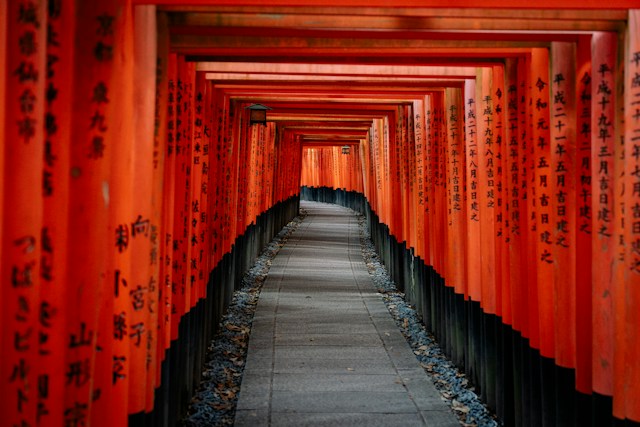
- Day 1: Fushimi Inari Shrine in the early morning (before crowds arrive), followed by Gion in the afternoon and evening
- Day 2: Arashiyama, including the bamboo grove and Tenryu-ji Temple
- Day 3: Kinkaku-ji (Golden Pavilion), Nijo Castle, and the Philosopher’s Path
- Day 4: A day trip to Nara to see the deer park and Todai-ji Temple, or Osaka for food and nightlife
Choose 3 days if your itinerary is efficient and you’re comfortable prioritizing a handful of highlights. Choose 4 days if you want to include Nara or Osaka without feeling like you’re checking boxes.
What’s the ideal total trip length for Kyoto and Tokyo?
For a tailor-made trip covering both cities well, 10 to 14 days is the ideal range. This gives you:
- 4-5 days in Tokyo
- 3-4 days in Kyoto
- 1-2 travel days (Tokyo to Kyoto via shinkansen takes about 2.5 hours)
- 2-3 days for day trips to Nara, Osaka, Hakone, or Nikko
This pacing avoids the common mistake of treating Japan like a checklist. A 10-14 day trip lets you experience a temple at sunrise, linger over a meal, or change plans if the weather doesn’t cooperate — all things that get sacrificed on a tighter schedule.
Can I see Kyoto and Tokyo in 7 days?
Yes, a 7-day Japan trip covering Kyoto and Tokyo is possible, but it requires careful planning and a willingness to prioritize. A realistic 7-day split is 3 days in Tokyo and 3 days in Kyoto, with 1 day reserved for travel between the two cities.
This timeline works best if you:
- Pick 2-3 priority neighborhoods per city rather than trying to cover everything
- Skip day trips to Nara or Osaka, or swap one Kyoto day for a half-day in Osaka instead
- Book shinkansen tickets in advance to avoid losing time at the station
Choose the 7-day version if your travel dates are fixed and you’d rather see Japan now than wait for a longer trip later. Choose the 10-14 day version if flexibility matters more than efficiency — it lets you absorb each city rather than sprint through it.
Should I add Osaka, Nara, or Hakone to my itinerary?
If you have more than 10 days, yes — these three destinations pair naturally with a Kyoto and Tokyo trip because of their proximity.
Nara is a half-day trip from Kyoto, roughly 45 minutes by train. It’s best known for Nara Park, where hundreds of semi-wild deer roam freely, and Todai-ji Temple, home to one of Japan’s largest bronze Buddha statues. One day is enough to see Nara’s highlights.
Osaka sits about 15 minutes from Kyoto by shinkansen, making it an easy addition for food lovers. Dotonbori’s street food scene, Osaka Castle, and the city’s more relaxed, casual atmosphere offer a nice contrast to Kyoto’s formality. Plan for 1-2 days.
Hakone is typically visited from Tokyo rather than Kyoto, and it’s popular for its hot springs (onsen), views of Mount Fuji, and Lake Ashi. It works well as a 1-2 day addition before or after your Tokyo stay, especially if you want a change of pace from city sightseeing.
Choose Nara if culture and history matter most to you. Choose Osaka if food and nightlife are a priority. Choose Hakone if relaxation and natural scenery round out your trip best.
What’s the best way to split time between Tokyo and Kyoto?
Most travelers get the best experience by starting in Tokyo and ending in Kyoto, or vice versa, rather than bouncing back and forth. A one-way shinkansen journey between the two cities takes about 2.5 hours, so a single transfer keeps your itinerary efficient.
A common and effective structure for a 12-day trip looks like this:
- Days 1-5: Tokyo (including a day trip to Hakone or Nikko)
- Day 6: Travel to Kyoto via shinkansen
- Days 7-10: Kyoto (including a day trip to Nara or Osaka)
- Days 11-12: Flex days — extend Kyoto, add Osaka, or return to Tokyo for departure
This one-directional flow minimizes travel fatigue and maximizes time actually spent exploring, rather than packing and repacking for multiple transfers.
When is the best time of year to visit Kyoto and Tokyo?
Spring (late March to early April) and fall (November) are the most popular times to visit, largely because of cherry blossoms and autumn foliage respectively. Both seasons bring mild weather and some of the most photogenic scenery in Japan, but they also bring larger crowds and higher hotel prices.
If you’re building a tailor-made itinerary, consider:
- Spring: Choose this season if cherry blossoms are a priority, but book accommodations several months ahead.
- Fall: Choose this season for comfortable walking weather and dramatic foliage in Kyoto’s temple gardens.
- Winter: Choose this season for fewer crowds, lower prices, and the chance to pair your trip with a visit to Hakone’s hot springs.
- Summer: Generally the least recommended due to heat and humidity, though festivals like Gion Matsuri in Kyoto (July) are a strong draw if you don’t mind the weather.
Planning your custom itinerary
The right number of days for Kyoto and Tokyo ultimately depends on your travel style. If you’d rather deeply experience two cities than rush through five, 10-14 days gives you the room to do that. If your schedule is tighter, a well-planned 7-day trip can still deliver a memorable first taste of Japan, as long as you’re realistic about what fits.
Whichever timeline you choose, build in buffer time. Japan’s trains run with precision, but travelers rarely do — and the trip you’ll remember most fondly is usually the one where you had time to wander, not just check sites off a list.
Frequently Asked Questions
How many days is too few for Kyoto and Tokyo?
Fewer than 5 total days makes it difficult to see both cities meaningfully. If your trip is that short, consider focusing on just one city instead of splitting time between both.
Is it better to visit Tokyo or Kyoto first?
Either order works well. Starting in Tokyo lets you ease into Japan with more English signage and infrastructure before Kyoto’s quieter, more traditional pace. Starting in Kyoto offers a slower introduction before Tokyo’s faster energy.
How do I travel between Tokyo and Kyoto?
The shinkansen (bullet train) is the fastest and most convenient option, taking about 2.5 hours one way. A Japan Rail Pass can offset the cost if you’re also taking day trips by train.
Do I need to book accommodations far in advance?
Yes, especially for spring and fall travel. Popular areas in both cities can book up months ahead during cherry blossom and foliage seasons.
Can I do Kyoto and Tokyo without a guided tour?
Yes. Japan’s public transportation, signage, and tourist infrastructure make independent travel manageable, even for first-time visitors. A tailor-made itinerary gives you more control over pacing than a fixed group tour.