Quick answer: Jaw Botox involves injecting botulinum toxin into the masseter muscles along the jawline. It softens an overly square or bulky jaw, creating a slimmer, more contoured lower face. Many patients also use it to relieve teeth grinding and jaw tension. Results typically last three to six months.
Sharp jawlines have become one of the most requested aesthetic features at clinics around the world. Scroll through any beauty feed and you’ll spot the same conversation: contoured cheeks, a slim lower face, and that crisp line running from ear to chin. What used to require surgery or clever makeup is now achievable with a few small injections.
Jaw Botox sits at the center of this trend. It’s a non-surgical treatment that reshapes the lower face, often in under fifteen minutes. But the appeal goes beyond looks. For people who clench or grind their teeth, the same treatment can ease real physical discomfort.
This post breaks down what jaw Botox actually does, why demand keeps climbing, who makes a good candidate, and what to expect before and after treatment. You’ll also find honest information about costs, risks, and how it compares to other contouring options—so you can decide whether it fits your goals.
What is jaw Botox and how does it work?
Jaw Botox is a cosmetic and therapeutic treatment that targets the masseter muscles. These are the large, paired muscles on each side of your jaw that handle chewing. When you clench your teeth, they’re the muscles you feel bulging near the back corner of your jaw.
Botulinum toxin temporarily blocks nerve signals to the muscle. Without those signals, the masseter relaxes and gradually shrinks from reduced use. Over several weeks, this slims the width of the lower face and softens a square jaw into a more tapered shape.
The treatment is sometimes called “masseter Botox” or “jaw slimming,” and the terms describe the same procedure. A practitioner injects small amounts of the toxin into each masseter, usually at two or three points per side.
Why do the masseter muscles get so large?
Some people are simply born with naturally bulky masseters. For others, the muscles grow over time from habitual clenching or grinding—a condition known as bruxism. Chewing tough foods like gum or hard candy regularly can also contribute. An enlarged masseter widens the jaw and can give the face a rounder, more square appearance even in slim individuals.
Why does jaw Botox keep trending?
Demand for facial contouring treatments has grown steadily over the past decade. Several forces are driving the specific rise of jaw Botox.
Social media and video culture. Front-facing cameras and video calls have made people more aware of their lower face and profile. A defined jawline reads well on camera, and the “snatched” look has become a recognizable beauty standard online.
A shift toward non-surgical options. People increasingly want results without the downtime, scarring, and cost of surgery. Jaw Botox offers a reversible, low-commitment way to test a slimmer profile. If you don’t like the result, it fades on its own.
The dual benefit. Unlike purely cosmetic treatments, jaw Botox solves a medical problem for many patients. People who grind their teeth at night discover that the same injections that slim their face also stop their morning jaw pain and headaches. That two-in-one value keeps drawing new patients.
Wider acceptance of “tweakments.” Small, maintenance-style aesthetic treatments have lost much of their stigma. Booking jaw Botox now feels closer to getting a haircut than undergoing a procedure.
Who is a good candidate for jaw Botox?
Jaw Botox suits several types of people. You may be a good candidate if you:
- Have a naturally wide or square lower face you’d like to slim
- Grind or clench your teeth, especially at night
- Experience jaw tension, tightness, or tension headaches
- Notice your jaw muscles feel large or overdeveloped
- Want a subtle change without surgery or long recovery
It’s less suitable for certain people. Pregnant or breastfeeding women are usually advised to wait. People with neuromuscular disorders, such as myasthenia gravis, should avoid botulinum toxin treatments. If your wide jaw comes from bone structure rather than muscle, Botox won’t change the underlying bone—a consultation can clarify the actual cause.
How do you know if your jaw width is muscle or bone?
A simple at-home check: clench your teeth and press your fingers against the back corner of your jaw. If you feel a firm muscle bulge that softens when you relax, muscle is likely a major contributor, and Botox can help. A qualified practitioner will confirm this during your consultation and may examine the way your jaw moves and rests.
What happens during a jaw Botox treatment?
The procedure is quick and done in a clinic, with no anesthesia required. Here’s the typical sequence:
- Consultation. Your practitioner examines your jaw, asks you to clench so they can locate the muscle, and discusses your goals.
- Marking. They mark the injection points on each side of your jaw.
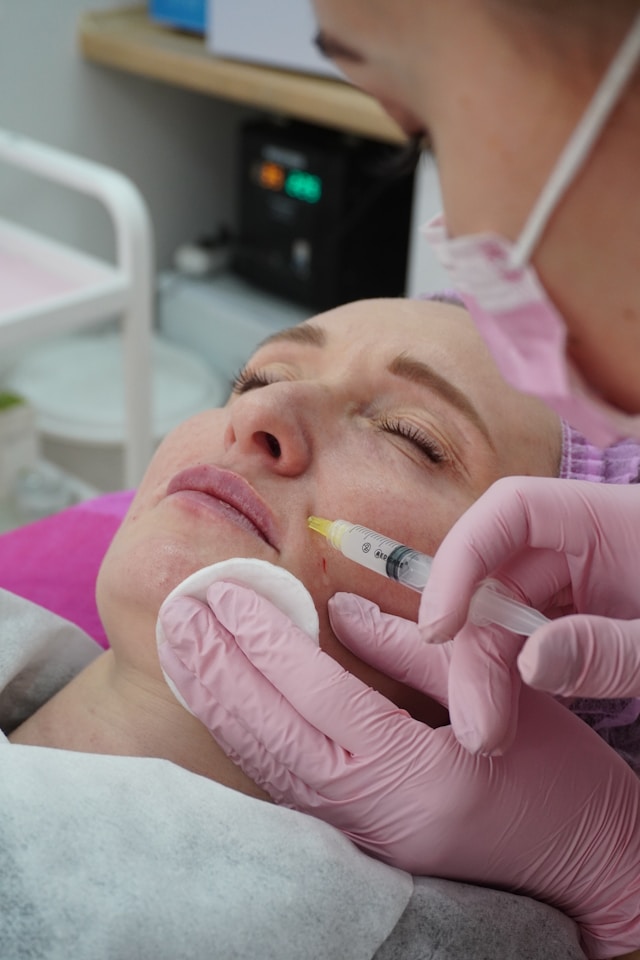
- Injection. Using a fine needle, they inject the botulinum toxin into the masseter at the marked points. Most people describe a quick pinch or sting.
- Done. The whole appointment usually takes 10 to 15 minutes. You can drive yourself home and return to normal activities right away.
How long until you see results from jaw Botox?
You won’t notice a change immediately. The muscle relaxes over the first one to two weeks, and visible slimming develops gradually as the masseter shrinks from reduced activity. The full facial-slimming effect often takes six to eight weeks to appear. Patients treating teeth grinding usually feel relief from clenching sooner, within a couple of weeks.
How long does jaw Botox last?
Results typically last three to six months. The exact duration depends on your metabolism, the dose used, and how strongly your muscles work. People with very active jaw muscles may find the effect wears off faster.
Many patients find that results last longer with repeat treatments. Because the masseter shrinks with reduced use, regular sessions can lead to longer gaps between appointments over time. Some people maintain their results with two to three treatments a year.
How much does jaw Botox cost?
Pricing varies widely by location, practitioner experience, and the number of units used. The masseter is a large muscle, so jaw Botox often requires more units than treatments for forehead lines or crow’s feet—which affects the final price.
As a rough guide, treatments are commonly priced either per unit or as a flat fee per session. Because masseter treatment uses a higher unit count, expect it to sit at the higher end of typical Botox pricing. Always ask for a clear quote during your consultation, and be cautious of prices that seem unusually low, as they may reflect diluted product or inexperienced injectors.
Choose a board-certified or medically qualified injector if safety and natural results matter more to you than finding the cheapest option. The masseter sits near important nerves and muscles involved in smiling and chewing, so technique matters.
What are the risks and side effects of jaw Botox?
Jaw Botox is considered safe when performed by a trained professional, but it carries some risks worth understanding.
Common, temporary side effects include:
- Mild bruising, swelling, or redness at the injection site
- Tenderness or aching for a day or two
- A temporary feeling that chewing tougher foods takes more effort while the muscle adjusts
Less common issues, usually linked to incorrect injection placement, include:
- An asymmetrical or uneven smile
- A “sunken” look if too much muscle is removed over time
- Difficulty chewing if the dose is too high
Most side effects are mild and resolve on their own. The risk of serious complications drops significantly when you choose an experienced, properly qualified injector who understands facial anatomy.
How does jaw Botox compare to other contouring options?
Jaw Botox isn’t the only route to a defined lower face. Here’s how it stacks up against the main alternatives.
Jaw Botox vs. dermal fillers. These do opposite jobs. Botox relaxes and slims a bulky muscle, while fillers add volume and structure, often along the chin or jaw angle to sharpen definition. Some people combine both—Botox to slim the sides and filler to sharpen the chin. Choose Botox if your jaw is wide from muscle; choose filler if you want more projection or a sharper angle.
Jaw Botox vs. surgery. Jaw reduction surgery permanently removes bone or muscle. It delivers dramatic, lasting results but involves general anesthesia, real recovery time, cost, and surgical risk. Choose surgery only if your jaw width comes from bone and you want a permanent change; choose Botox if you prefer a reversible, low-downtime option.
Jaw Botox vs. skincare and makeup. Contouring makeup and skin-tightening devices can enhance the appearance of a jawline, but they don’t change muscle size. They work best as complements to, not replacements for, a structural treatment.
A defined jawline, on your terms
Jaw Botox from Kelly Oriental Aesthetic keeps trending because it delivers on two fronts at once: a slimmer, more sculpted lower face and relief from the very real discomfort of teeth grinding. It’s fast, reversible, and requires no downtime—which explains why it has moved from niche treatment to mainstream request.
Still, results depend heavily on who holds the needle. The masseter is a powerful muscle surrounded by structures that control your smile and your bite, so the skill of your injector matters more than the price on the menu. Book a consultation with a qualified, experienced practitioner, ask to see before-and-after photos of their masseter work, and be clear about whether your goal is slimming, pain relief, or both.
If you’ve been curious about a more contoured profile—or you’re tired of waking up with a sore jaw—a consultation is a low-pressure way to learn whether jaw Botox fits your face and your goals.
Frequently asked questions
Does jaw Botox hurt?
Most people describe only a quick pinch or sting at each injection point. The needles are fine, the treatment is brief, and no anesthesia is usually needed. Any tenderness afterward is mild and fades within a day or two.
Will jaw Botox change my smile?
When done correctly, jaw Botox should not affect your smile. The treatment targets the masseter, not the muscles that control facial expression. An uneven smile is a rare side effect linked to incorrect injection placement, which is why choosing an experienced injector is important.
Can jaw Botox help with teeth grinding?
Yes. Relaxing the masseter muscle reduces the force of clenching and grinding (bruxism). Many patients seek jaw Botox specifically for relief from morning jaw pain, tension headaches, and the dental wear caused by grinding.
How often do I need to repeat jaw Botox?
Results last around three to six months, so most people repeat the treatment two to three times a year. Over time, the masseter may stay smaller with regular treatment, which can lengthen the gap between sessions.
Is jaw Botox permanent?
No. Jaw Botox is temporary and reversible. The muscle gradually returns to its original size once the effect wears off, which is one reason many people find it a low-commitment way to try a slimmer jaw.