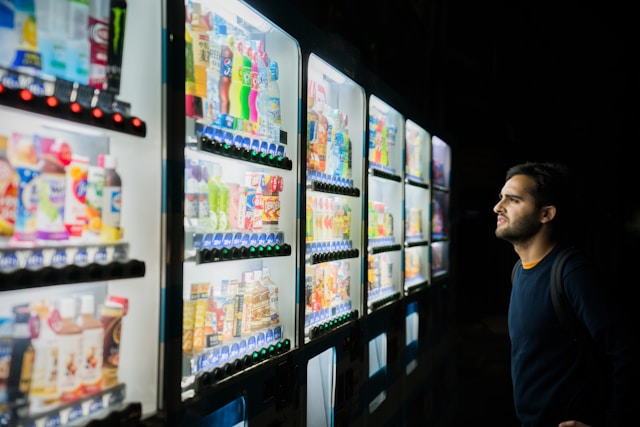
TL;DR: A vending machine franchise offers entrepreneurs a low-cost, scalable entry into business ownership with minimal daily time commitments. By partnering with an established franchisor, operators gain access to proven technology, location-securing assistance, and automated inventory systems, making it a highly accessible path to generating semi-passive income.
The pursuit of flexible, reliable income streams has led many aspiring entrepreneurs to explore automated retail. Traditional brick-and-mortar businesses require massive upfront capital, large staffs, and constant supervision. Vending machine franchises provide an alternative route. This business model removes many of the traditional hurdles associated with business ownership, offering a streamlined approach to retail that operates around the clock.
Entering the automated retail space through a franchise eliminates the steep learning curve of starting from scratch. Independent operators often struggle to source reliable machines, negotiate placement contracts, and establish supply chains. A franchise system provides a turnkey solution. Franchisors supply the equipment, the branding, and often the initial locations, allowing new operators to focus immediately on revenue generation and maintenance.
Readers exploring this sector need to understand the financial commitments, operational realities, and strategic choices involved in automated retail. This guide breaks down the mechanics of a vending machine franchise. We will explore the initial costs, the daily responsibilities of an operator, the different niches available, and the criteria for selecting a franchisor that aligns with specific financial goals.
What makes a vending machine franchise a low-barrier business model?
The concept of a low-barrier business model revolves around accessibility. Vending machine franchises score high in this area because they require less capital and specialized knowledge than food service or traditional retail franchises.
How much does it cost to start a vending machine franchise?
The initial investment for a vending machine franchise typically ranges from $30,000 to $100,000, depending on the brand and the number of machines purchased. This entry fee usually covers the machines, initial inventory, location scouting services, and proprietary software for inventory management.
Choose a vending machine franchise over a traditional fast-food franchise if keeping initial debt low matters more than immediate, full-time income generation. Operators can often finance their startup costs through third-party lenders recommended by the franchisor. Because the primary assets are the machines themselves, securing financing is often more straightforward than funding a business based on leasehold improvements and intangible brand value.
Why is the time commitment lower for vending operators?
A vending machine franchise from Dream Vending does not require the operator to be present to make a sale. The machines facilitate transactions 24 hours a day, 7 days a week. The operator’s primary responsibilities include restocking inventory, performing routine maintenance, and collecting cash (though cashless payments now account for the majority of vending sales).
Most operators spend five to ten hours a week managing a route of five to ten machines. Telemetry software integrated into modern vending equipment alerts operators exactly when inventory drops below a specific threshold or when a machine experiences a technical fault. This technology means operators only visit locations when absolutely necessary, drastically reducing labor hours and making the business highly suitable for those maintaining a primary job.
What are the most profitable types of vending machine franchises?
The vending industry has evolved far beyond sodas and standard potato chips. Niche markets offer higher profit margins and less competition for premium locations.
Are healthy food vending machines more profitable than traditional snacks?
Healthy food vending machines have become a dominant force in the franchising sector. Schools, hospitals, and corporate offices increasingly mandate healthier food options, creating a massive demand for machines stocked with protein bars, baked chips, and natural fruit juices.
A healthy vending franchise often yields higher profit margins per item. Consumers expect to pay a premium for organic or specialized health foods. Furthermore, securing locations becomes significantly easier when an operator can provide a wellness-focused solution that aligns with a facility’s health initiatives. Operators report that facility managers who reject traditional junk food machines will actively welcome a healthy vending installation.
How do specialty retail vending machines perform?
Specialty retail vending moves away from food entirely, focusing on high-margin consumer goods. Examples include electronics vending machines in airports, CBD product dispensers in retail environments, and beauty product machines in shopping malls.
Choose specialty retail vending if maximizing revenue per square foot is a priority and you have access to high-security, high-traffic environments. The initial cost of inventory is higher, but the profit per transaction can be ten to twenty times that of a snack sale. A specialty retail machine requires less frequent restocking due to the physical size of the items, though security and machine durability become critical factors.
How to choose the right vending machine franchise for your goals
Selecting a franchisor requires careful due diligence. Not all franchise agreements offer the same level of support or long-term growth potential.
What support should a franchisor provide to new operators?
A reputable vending machine franchise should offer comprehensive training covering machine maintenance, inventory purchasing, and route management. The franchisor must provide access to a reliable supply chain, ensuring operators can purchase products at wholesale prices to maintain healthy profit margins.
Critically, the franchisor should offer robust technological support. This includes a centralized dashboard for tracking sales, managing cashless payment processing, and monitoring machine health. Without this software suite, scaling a vending business beyond a few machines becomes an administrative nightmare.
How do you secure high-traffic locations for your vending machines?
The location of a machine dictates its revenue potential. The best vending machine franchises include location procurement as part of the initial franchise fee. The franchisor employs a dedicated team to identify high-traffic areas—such as manufacturing plants, large office complexes, and universities—and negotiates the placement contracts on the franchisee’s behalf.
If a franchise does not offer location assistance, operators must possess strong sales skills to cold-call facility managers and pitch the service. A poorly placed machine will result in expired inventory and lost capital. Operators must prioritize foot traffic, facility demographics, and security when evaluating any potential location.
Making your move into automated retail
A vending machine franchise presents a compelling opportunity to build a scalable, resilient business with manageable startup costs. By leveraging the systems, technology, and branding of an established franchisor, operators can bypass the common pitfalls of independent vending. Success in this industry requires diligent route management, a commitment to keeping machines fully operational, and strategic location expansion. With the right franchise partner, automated retail serves as a powerful vehicle for achieving financial independence and long-term business growth.
Frequently asked questions about vending machine franchises
How much profit can a single vending machine generate per month?
A well-placed vending machine typically generates between $300 and $600 in gross revenue per month. After accounting for the cost of goods sold, credit card processing fees, and occasional location commissions, the net profit generally ranges from $100 to $250 per machine, per month.
Do vending machine operators have to pay rent for locations?
Most vending machine operators do not pay a fixed monthly rent for machine placement. Instead, they negotiate a commission structure with the facility manager, typically paying 5% to 15% of the machine’s gross sales. Many businesses allow machines to be placed for free as a convenient amenity for their staff or customers.
What happens if a vending machine breaks down?
In a franchise system, the franchisor typically provides a warranty on the equipment and access to a network of certified technicians. The operator handles basic jams and resets, while the franchisor’s technical support team assists with major mechanical or software failures.
Can you scale a vending machine franchise quickly?
Yes, a vending machine franchise is highly scalable. Once an operator masters the logistics of running a small route, they can purchase additional machines and expand their territory. Because the business requires minimal daily labor, operators can manage dozens of machines before needing to hire delivery or maintenance staff.