Quick answer: Before installing solar panels in Singapore, businesses should assess roof condition and space, understand the difference between buying and leasing (PPAs), factor in the SolarNova program and net-metering rules, and calculate expected payback. Most commercial systems in Singapore pay for themselves within 6–8 years, with panels lasting 25 years or more.
Solar energy has moved from a niche experiment to a mainstream business decision in Singapore. With ambitious national targets, rising electricity costs, and growing pressure from customers and investors to cut emissions, more companies are looking up—at their rooftops—for answers.
But installing a solar energy system is a significant commitment. The wrong decision can tie up capital, complicate your roof maintenance, or leave you with a system that underperforms. The right decision, on the other hand, can slash your energy bills for decades while strengthening your sustainability credentials.
This guide walks through what your business should consider before going solar in Singapore. From government incentives and financing models to roof suitability and maintenance, you’ll learn what really matters—so you can make a confident, informed choice.
Why are more Singapore businesses switching to solar?
Singapore has set a national target to deploy at least 2 gigawatt-peak (GWp) of solar energy by 2030, enough to meet around 3% of the country’s projected electricity demand. Solar is the country’s most promising renewable resource, given its limited land, lack of rivers for hydropower, and low average wind speeds.
For businesses, the appeal comes down to a few practical drivers:
- Lower electricity costs. Commercial electricity tariffs in Singapore have climbed over the past decade. Generating your own power reduces how much you draw from the grid.
- Sustainability goals. Many companies now report on environmental, social, and governance (ESG) metrics. On-site solar directly cuts Scope 2 emissions.
- Customer and investor expectations. Large clients increasingly ask suppliers about their carbon footprint. Solar can help you win and keep contracts.
- Long asset life. Quality solar panels are designed to last 25 years or more, offering decades of returns after the payback period.
Singapore’s tropical climate delivers strong, consistent sunlight throughout the year, making rooftop solar genuinely viable for factories, warehouses, offices, and retail spaces alike.
Is your roof suitable for solar panels?
Not every roof is a good candidate. Before committing, a proper site assessment should look at several factors.
Roof space and orientation
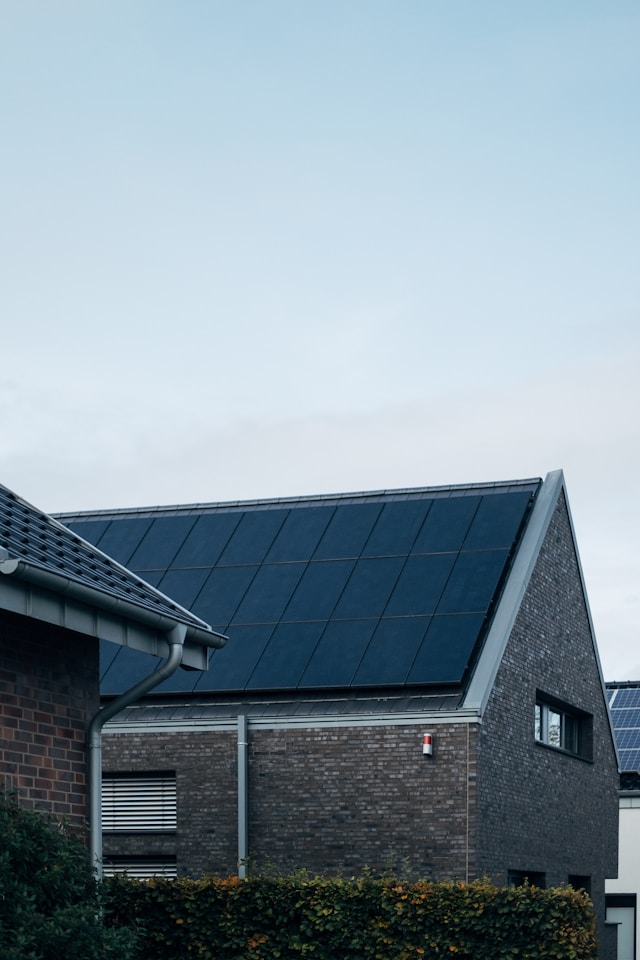
Commercial solar systems need substantial unshaded area. Large flat roofs—common on warehouses and industrial buildings—are ideal because panels can be mounted at the optimal tilt. In Singapore, panels are usually installed at a low tilt angle (around 10–15 degrees) due to the sun’s near-overhead position.
Roof condition and age
Solar panels last around 25 years, so your roof needs to last at least as long. If your roof is nearing the end of its life, it’s far cheaper to replace it before installation than to remove and reinstall panels later. A structural engineer should confirm the roof can bear the additional load of panels and mounting equipment.
Shading
Nearby buildings, water tanks, air-conditioning units, or trees can cast shadows that reduce output. Even partial shading on one panel can drag down the performance of a whole string, so shading analysis is a critical part of the assessment.
Should you buy or lease your solar system?
One of the biggest decisions is how to pay for your system. There are two main models in Singapore.
Buying the system outright (CAPEX)
With the capital expenditure model, your business purchases and owns the system. You cover the upfront cost, then enjoy all the electricity savings and any energy sold back to the grid.
Choose buying if you have the capital available and want the highest long-term returns. Ownership typically delivers the best lifetime savings, and the system becomes a company asset.
Leasing through a Power Purchase Agreement (PPA)
Under a solar PPA, a developer installs, owns, and maintains the system on your roof at no upfront cost. You simply buy the electricity it generates, usually at a rate lower than the grid tariff, over a contract period of 15–25 years.
Choose a PPA if you want to avoid upfront capital outlay, prefer not to handle maintenance, and value predictable energy pricing. The trade-off is lower total savings compared to owning the system.
For many businesses, the decision hinges on cash flow priorities. If preserving capital matters more than maximizing long-term savings, a PPA is often the better fit. If you can invest upfront and want the biggest return, buying wins.
What government support is available for solar in Singapore?
Singapore’s approach focuses more on enabling frameworks than on direct cash rebates, but there are meaningful programs worth knowing.
SolarNova program
SolarNova is a whole-of-government effort led by the Economic Development Board (EDB) and Housing & Development Board (HDB) to accelerate solar adoption across public sector rooftops and spaces. While it primarily targets government buildings, it has helped scale the local solar industry, driving down installation costs for everyone—including private businesses.
Net metering (Simplified Credit Treatment)
If your solar system generates more electricity than you use, you can export the excess to the grid. Under the Enhanced Central Intermediary Scheme and Simplified Credit Treatment, eligible consumers receive credit for exported energy. The exact compensation depends on your consumption profile and contract, so it’s worth modeling this carefully.
Green financing
Several banks in Singapore offer green loans and sustainability-linked financing to support renewable energy projects. These can improve the economics of buying a system outright.
How much do solar panels cost for a business in Singapore?
Costs vary widely based on system size, roof complexity, and equipment quality. Larger systems generally cost less per kilowatt-peak (kWp) because of economies of scale.
The key metric to focus on is not the headline price but the payback period and levelized cost of energy (LCOE). For many commercial installations in Singapore, the payback period falls in the range of 6–8 years. After that, the electricity is essentially free for the remaining 15+ years of the system’s life.
When comparing quotes, look beyond the sticker price. Consider:
- Panel efficiency and brand warranty (typically 25 years for performance).
- Inverter quality and warranty (inverters often need replacing once during the system’s life).
- Installer track record and after-sales support.
- Monitoring systems that let you track performance in real time.
What ongoing maintenance do solar panels require?
One of solar’s biggest advantages is low maintenance. With no moving parts, panels are durable and reliable. That said, some upkeep protects your investment.
- Cleaning. Dust, bird droppings, and debris reduce output. In Singapore’s climate, rain helps, but periodic cleaning keeps efficiency high.
- Inverter checks. Inverters are the most likely component to fail over time and should be monitored.
- Performance monitoring. A monitoring platform alerts you to drops in output so issues can be fixed quickly.
If you sign a PPA, maintenance is usually the developer’s responsibility—one reason some businesses prefer this model.
How long does installation take?
Timelines depend on system size and approvals. For a typical commercial rooftop system, expect the full process—site assessment, design, licensing with the Energy Market Authority (EMA), grid connection approval, and physical installation—to take several months. Larger or more complex projects take longer. Building this lead time into your planning avoids surprises.
Common mistakes businesses make when going solar
Learning from others’ errors can save you time and money. Watch out for these pitfalls:
- Skipping the roof assessment. Installing on an aging roof leads to costly removal and reinstallation later.
- Choosing on price alone. The cheapest quote often uses lower-quality panels or offers weak after-sales support.
- Oversizing or undersizing the system. A system that’s too large exports cheap power you could have used; too small, and you leave savings on the table.
- Ignoring shading. Underestimating shade impact leads to disappointing output.
- Overlooking the installer’s reputation. A reliable partner with strong warranties matters over a 25-year lifespan.
Making the right call for your business
Going solar in Singapore is one of the clearest ways to cut long-term energy costs while advancing your sustainability goals. The technology is proven, the sunlight is abundant, and the payback math increasingly works in businesses’ favor.
The smartest path starts with three steps. First, commission a professional site assessment to confirm your roof’s suitability. Second, decide whether buying or a PPA fits your cash flow and risk appetite. Third, gather quotes from at least two or three reputable installers, comparing warranties and track records rather than price alone.
With the right preparation, your rooftop can become a decades-long source of clean, affordable energy. Take the time to plan properly, and the returns will follow—year after sunny year.
Frequently asked questions
How long do solar panels last in Singapore?
Quality solar panels from solarpanelcontractor.sg are designed to last 25 years or more, with most manufacturers offering performance warranties for that period. Panels gradually lose a small percentage of efficiency each year but continue generating meaningful power well beyond the warranty term.
What is the payback period for commercial solar in Singapore?
For many commercial installations in Singapore, the payback period is around 6–8 years, depending on system size, electricity usage, and financing model. After the payback period, the electricity generated is effectively free for the rest of the system’s lifespan.
Is it better to buy or lease solar panels?
Buying outright delivers the highest long-term savings and makes the system a company asset, so it suits businesses with available capital. A Power Purchase Agreement (PPA) requires no upfront cost and includes maintenance, making it better for businesses that want to preserve cash flow and avoid operational responsibility.
Do solar panels work well in Singapore’s climate?
Yes. Singapore’s location near the equator provides strong, consistent sunlight year-round, making it well-suited to solar power. High temperatures can slightly reduce panel efficiency, but quality systems are designed to perform reliably in tropical conditions.
Can I sell excess solar energy back to the grid in Singapore?
Yes. Through schemes like Simplified Credit Treatment, eligible businesses can export surplus electricity to the grid and receive credit. The exact compensation depends on your consumption profile and contract terms, so it’s worth modeling before installation.