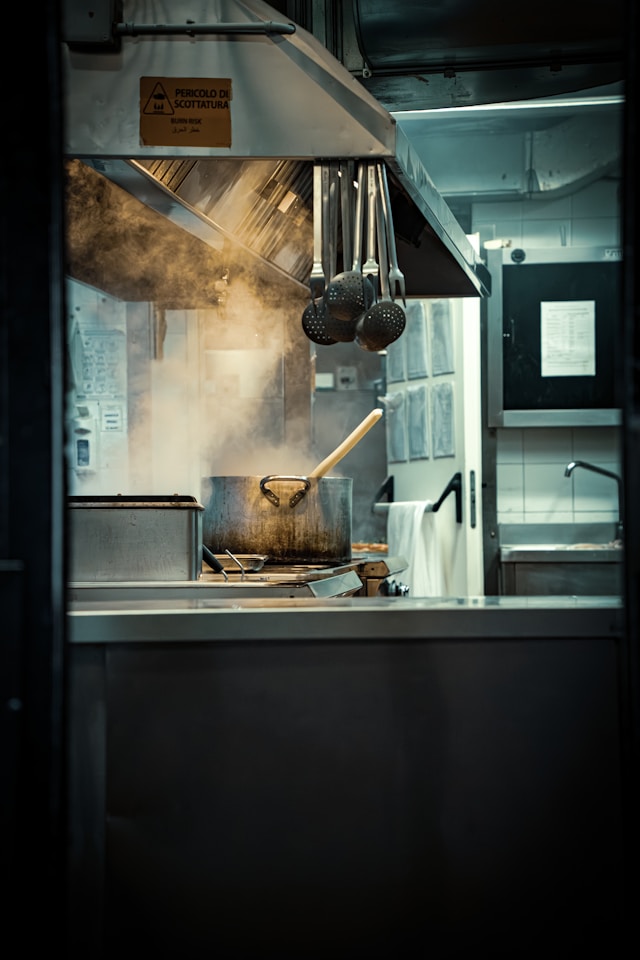
Quick answer: Commercial kitchen exhaust systems remove heat, grease, smoke, and odors generated during cooking, protecting staff comfort, food safety, and fire safety. A properly designed exhaust system balances makeup air, filters grease effectively, and meets local fire codes like NFPA 96. Poor ventilation leads to grease buildup, excess heat, higher fire risk, and costly code violations.
Walk into any restaurant kitchen during peak service and you’ll notice it immediately: the heat radiating off the line, the faint haze hanging near the ceiling, the smell of the day’s specials lingering long after the plates go out. Behind the scenes, a commercial kitchen exhaust system is working to pull all of that away before it becomes a problem for your staff, your customers, or your health inspector.
Kitchen ventilation rarely gets the attention it deserves until something goes wrong. A grease fire, a failed inspection, or a kitchen so hot that staff turnover spikes during summer months — these are the moments when operators start asking hard questions about their exhaust systems. By then, the fix is usually more expensive and disruptive than it needed to be.
This guide breaks down how commercial kitchen exhaust systems work, why they matter for comfort and cleanliness, and what to look for if your current setup isn’t pulling its weight. Whether you’re opening a new restaurant, renovating an existing one, or just trying to figure out why your kitchen always feels like a sauna, understanding your exhaust system is the first step toward a safer, more comfortable operation.
What Does a Commercial Kitchen Exhaust System Actually Do?
A commercial kitchen exhaust system captures airborne heat, grease particles, smoke, and odors produced during cooking and vents them safely outside the building. The system typically includes a hood positioned above cooking equipment, ductwork that carries contaminated air out of the building, grease filters that trap airborne grease before it enters the ductwork, and an exhaust fan that powers the entire process.
Most commercial kitchens pair this exhaust system with a makeup air system. Makeup air replaces the volume of air the exhaust fan removes, preventing negative pressure that can cause doors to stick, pilot lights to blow out, or outside air to be pulled in through unwanted gaps.
Without proper exhaust, cooking byproducts don’t just disappear. Grease-laden vapor settles on surfaces, heat accumulates in the kitchen, and smoke and odors drift into dining areas. Over time, this creates conditions that are uncomfortable for staff, unpleasant for customers, and genuinely hazardous from a fire safety standpoint.
Why Does Kitchen Ventilation Matter for Staff Comfort?
Commercial kitchens are already demanding environments. Add inadequate ventilation, and the heat becomes nearly unbearable. Cooking equipment like fryers, griddles, and ranges generates significant ambient heat, and without an exhaust system pulling that heat away, kitchen temperatures can climb well above what’s safe or comfortable for extended shifts.
This has real operational consequences. Overheated kitchens contribute to fatigue, reduced concentration, and slower response times — all of which increase the risk of workplace accidents. Staff working in poorly ventilated kitchens are also more likely to experience heat-related illness during long shifts, particularly in summer months or in kitchens running multiple pieces of high-heat equipment simultaneously.
A well-designed exhaust system, paired with adequate makeup air, keeps kitchen temperatures within a manageable range. This isn’t just about comfort for its own sake — kitchens that maintain reasonable working conditions tend to see better staff retention and fewer heat-related incidents during peak service.
How Does Exhaust Ventilation Affect Cleanliness and Food Safety?
Grease is the primary cleanliness concern in any commercial kitchen, and exhaust systems play a direct role in managing it. As grease-laden vapor rises from cooking equipment, the exhaust hood captures it before it can settle on nearby surfaces, equipment, and structural elements.
Grease filters within the hood trap larger grease particles, preventing them from traveling further into the ductwork. Choose a hood with baffle filters over mesh filters if grease capture efficiency is the priority, since baffle filters generally trap grease more effectively and are easier to clean.
When exhaust systems are undersized, poorly maintained, or improperly installed, grease escapes capture and accumulates on ceiling tiles, walls, and light fixtures. This creates two problems. First, it’s a genuine sanitation issue that can trigger violations during health inspections. Second, and more seriously, accumulated grease is highly combustible, turning routine kitchen operations into a fire risk.
What Fire Safety Standards Apply to Kitchen Exhaust Systems?
In the United States, commercial kitchen exhaust systems are governed primarily by NFPA 96, the Standard for Ventilation Control and Fire Protection of Commercial Cooking Operations. NFPA 96 sets requirements for hood design, ductwork construction, filter type, fire suppression system integration, and cleaning frequency.
Cleaning frequency requirements under NFPA 96 vary based on cooking volume. High-volume operations like 24-hour restaurants or establishments doing solid-fuel cooking typically require monthly cleaning, while moderate-volume kitchens may only need quarterly service. Low-volume operations, such as churches or seasonal businesses, may qualify for annual cleaning schedules.
Local jurisdictions often layer additional requirements on top of NFPA 96, so it’s worth checking with a local fire marshal or code official before finalizing any exhaust system design or maintenance schedule.
How Do You Know If Your Kitchen Exhaust System Is Undersized?
An undersized exhaust system rarely fails all at once — it shows up in small, cumulative frustrations. Watch for these signs:
- Persistent heat: The kitchen stays uncomfortably hot even with the exhaust fan running continuously.
- Visible smoke or haze: Cooking smoke lingers near the ceiling instead of being pulled into the hood.
- Grease residue: Grease builds up on surfaces near cooking equipment faster than expected.
- Odor drift: Cooking odors travel into dining areas or adjacent spaces.
- Doors and windows behaving oddly: Difficulty opening exterior doors can indicate negative pressure from insufficient makeup air.
If your kitchen shows two or more of these signs, it’s worth having a ventilation professional assess whether your current system matches your cooking equipment’s actual heat and grease output.
Choose a Larger Exhaust Hood If You’re Adding High-Heat Equipment
Exhaust systems are typically sized based on the specific cooking equipment beneath them. If you’re adding a chargrill, wok range, or other high-heat equipment to your line, your existing hood may no longer provide adequate capture, even if it worked fine before. Choose a properly sized hood — or consult a mechanical engineer about upgrading your existing one — any time you introduce new equipment with a different heat or grease profile than what the system was originally designed for.
What Maintenance Does a Commercial Kitchen Exhaust System Require?
Regular maintenance keeps exhaust systems performing as designed and keeps kitchens compliant with fire codes. A typical maintenance routine includes:
- Daily filter checks: Grease filters should be inspected daily during high-volume operation and cleaned as needed.
- Weekly filter cleaning: Many operators run filters through a dishwasher or degreasing solution weekly.
- Professional hood and duct cleaning: Scheduled according to NFPA 96 guidelines based on cooking volume — monthly, quarterly, semi-annually, or annually.
- Fan inspection: Exhaust fans should be checked periodically for grease buildup, belt wear, and proper airflow.
- Makeup air system checks: Ensure makeup air units are delivering adequate replacement air and functioning correctly alongside the exhaust fan.
Skipping professional cleanings is one of the most common — and most costly — mistakes operators make. Grease buildup in ductwork is a leading contributor to commercial kitchen fires, and many insurance policies require proof of regular cleaning to maintain coverage.
Keeping Your Kitchen Running Comfortably and Safely
Commercial kitchen exhaust systems handle a job that’s easy to overlook until it isn’t working. When they’re properly sized, well-maintained, and paired with adequate makeup air, they keep kitchens cooler, cleaner, and significantly safer for everyone working the line.
If you’re not sure whether your current system is up to the job, start with an honest look at the signs covered above — lingering heat, visible smoke, grease buildup, or odor drift are all worth investigating. From there, a conversation with a qualified kitchen ventilation contractor or mechanical engineer can clarify whether your system needs a maintenance overhaul, a redesign, or just a more consistent cleaning schedule.
Comfortable, code-compliant kitchens don’t happen by accident. They happen because someone paid attention to the exhaust system before it became a problem.
Frequently Asked Questions
How much does a commercial kitchen exhaust system cost?
Costs vary widely for commercial kitchen exhaust based on kitchen size, hood type, ductwork length, and local code requirements, but most commercial installations range from a few thousand dollars for smaller setups to tens of thousands for large, high-volume kitchens. Getting quotes from local ventilation contractors is the most reliable way to estimate cost for a specific space.
How often should a commercial kitchen exhaust system be cleaned?
Cleaning frequency depends on cooking volume under NFPA 96 guidelines: monthly for high-volume or solid-fuel cooking operations, quarterly for moderate-volume kitchens, semi-annually for low-volume operations, and annually for seasonal or minimal-use kititchens.
What happens if a kitchen exhaust system isn’t properly maintained?
Neglected exhaust systems accumulate grease in ductwork and filters, increasing fire risk significantly. Poor maintenance can also lead to failed health and fire inspections, insurance complications, and reduced system efficiency, which drives up kitchen temperatures and energy costs.
Do I need makeup air with my kitchen exhaust system?
Most commercial kitchen exhaust systems require a makeup air system to replace the air being exhausted. Without it, kitchens can experience negative pressure, which makes doors difficult to open, can extinguish pilot lights, and reduces the exhaust system’s overall effectiveness.
Who should I hire to design or inspect a kitchen exhaust system?
A licensed mechanical engineer or commercial kitchen ventilation contractor should handle system design, while certified hood cleaning companies typically handle ongoing maintenance. Choose contractors familiar with NFPA 96 and your local fire code requirements.